
Birdwatching changes the pace of a forest visit. Instead of moving towards a single landmark, you may spend time listening, checking a patch of foliage or waiting for a better view from an appropriate stopping place. That slower attention can be rewarding even when an identification remains uncertain. A worthwhile outing does not need every bird to sit in the open or every photograph to be sharp.
The Uganda Wildlife Authority’s bird information includes Bwindi in its forest-birding context. For a visitor, the practical next step is choosing a suitable authorised outing and a guide who understands your interests. A species list is useful background, but it cannot tell you what will appear on a particular route or day.
Explain what you want from the outing
Tell the guide or organiser whether you are new to birdwatching, have particular interests, or mainly want help learning how to observe a forest. Those are different starting points. A beginner may value patient explanations of sound and movement; a more experienced birder may want to discuss habitats and identification difficulties. Neither should have to pretend to want the other’s outing.
Ask how the route and pace are agreed, where the activity starts and what current permissions apply. Discuss your practical requirements in enough detail for the organiser to answer usefully. “A birding walk in Bwindi” is a broad description. The named visitor area, the leader’s role and the actual arrangements make it a plan.
Carry less, but know what you have
If you use binoculars, practise adjusting them before the trip. Being able to find a nearby object quickly is more useful than discovering unfamiliar controls when a bird moves. A small notebook or an offline recording of your own observations can help, but do not let equipment occupy all your attention. Ask the guide before using any sound playback or other technique that could disturb wildlife.
Choose camera equipment you can manage on the agreed outing without blocking the route or needing to step into vegetation. Bring whatever protection your equipment needs for the conditions described by the organiser. The aim is to keep the outing comfortable and focused, not to carry every possible lens in case a perfect subject appears.
Describe first, identify second
When you see something briefly, note what you actually observed: size relative to a familiar bird, posture, movement, visible colour patches and the part of the forest it used. A guide may be able to combine those details with a call or another view. If the evidence is insufficient, leave the identification open. A careful uncertain note is better than a confident label attached to a guess.
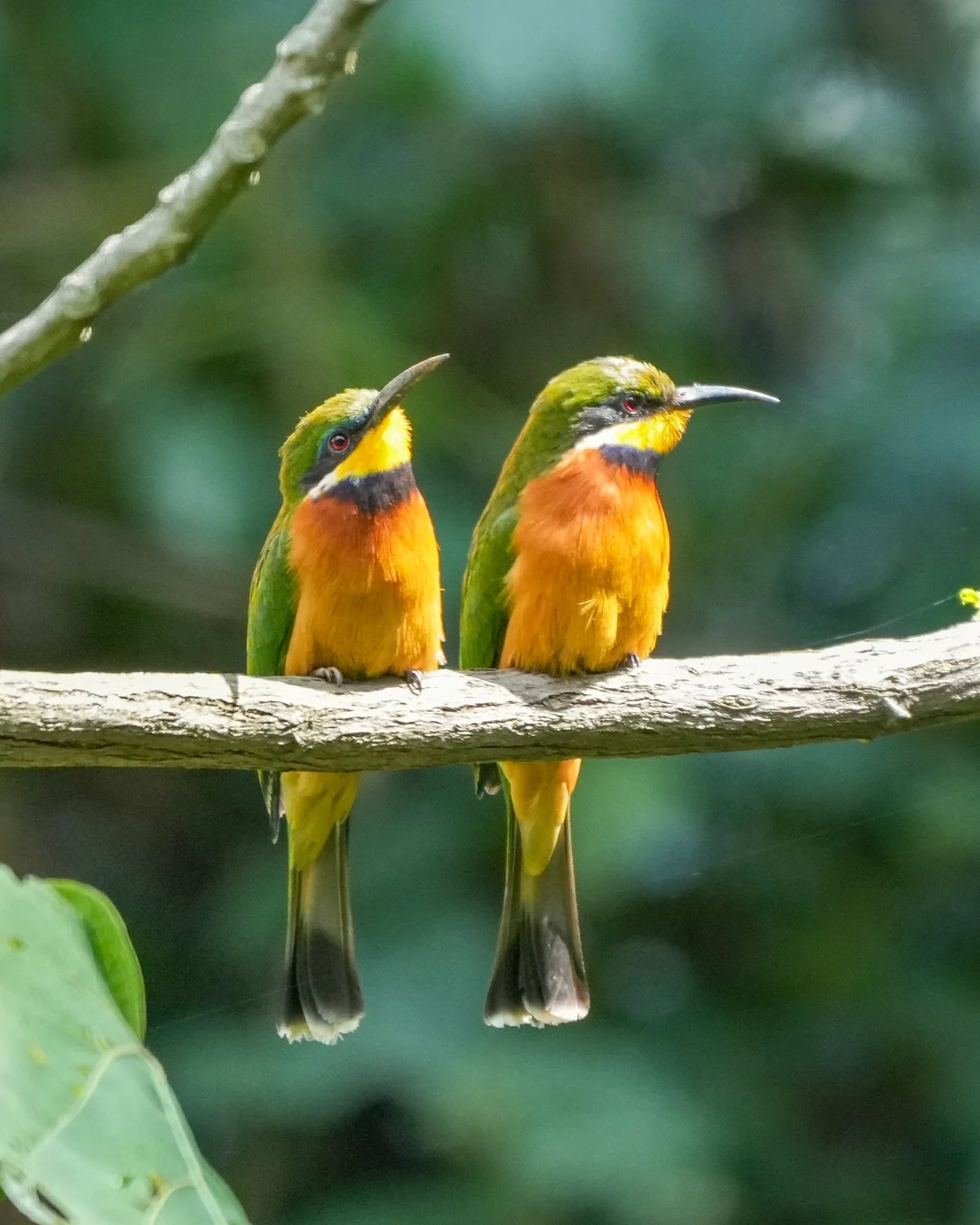
The blue-breasted bee-eater photograph accompanying this article is a licensed image made at Bwindi by Giles Laurent. It illustrates a documented subject in the destination; it is not a forecast for your visit or a claim that we photographed the bird ourselves. Keep that distinction in mind when using any travel image to shape expectations.
Make space for listening
A pause can help the group notice what movement and conversation would otherwise obscure. Follow the guide’s lead about where to stop and how to behave. Avoid walking away from the agreed route to pursue a sound or a photograph. The interesting part of a birding outing often lies in learning how the guide reads a situation, rather than simply accumulating names.
If you travel with people whose interests differ, discuss the pace beforehand. A dedicated outing and a general forest visit may serve different expectations. There is no need to make everyone enjoy the same activity in the same way. Agreeing that in advance gives the guide a clearer brief and reduces pressure to rush when someone wants time to observe.

Kampala’s Best Experience walking tour
Based on our past positive reputation for the past years, we guarantee you that our team is so exceptional in delive...

Kampala Cultural Tour
Its an informative, breathe taking experience that makes theb visitor get a clear insight into the country's culture...

The Best 1Day Jinja Tour & source of the Nile River Experience
Jinja is arguably Uganda’s heartbeat, it is a gem of unrivaled beauty, an asset to Uganda of humongous economic po...
Keep records that remain useful later
After the outing, add the date, broad location and the guide’s corrections to your notes while you can still distinguish them from your first impressions. Be thoughtful about sharing precise wildlife locations. Ask before crediting someone by name or publishing a quotation. A useful personal record can preserve what you learned without exposing information that should remain private.
For the rest of your stay, connect the birding plan with a practical overnight base and leave enough flexibility for the organiser’s current advice. Our forest reading guide suggests other things to notice when birds remain out of view. A quiet stretch of forest is still a place worth paying attention to.