
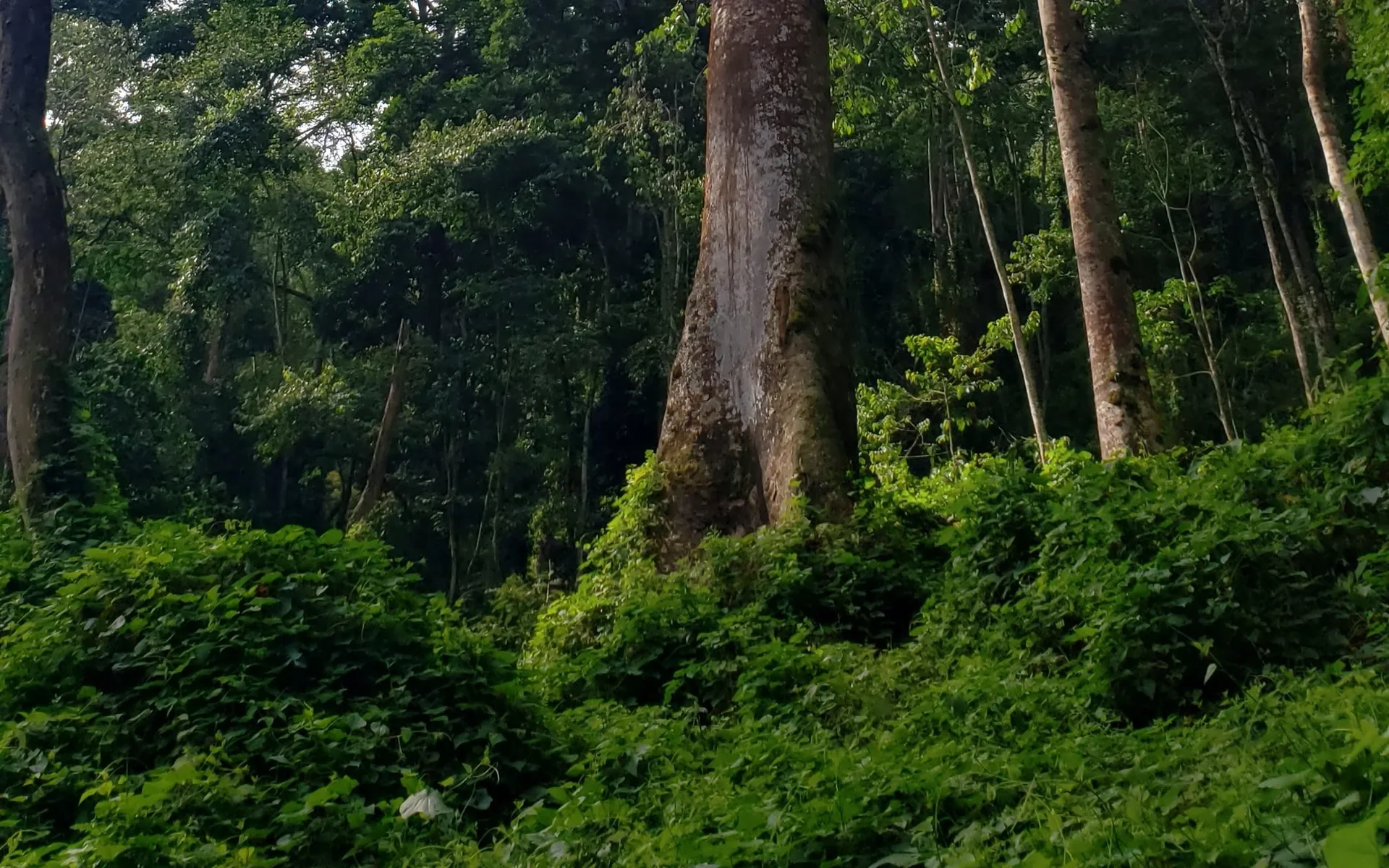

Bwindi becomes easier to understand when a visit has room for more than one kind of attention. A distant canopy view, a close look at a trunk and a patient pause beside a guide reveal different things. None requires turning the forest into a checklist. Start by thinking about what you would like to notice, then choose an authorised visit that gives you time to look without leaving its agreed route.
The setting matters. UNESCO’s World Heritage description places Bwindi at a meeting of lowland and montane forest. That is useful context for a varied landscape, not a promise that every habitat or animal will be visible on a short visit. This guide focuses on ways to pay attention and questions to bring to the people responsible for your visit.

Queen Elizabeth Open Safari Jeeps for game drives.
Queen Elizabeth National Park in Uganda is a fantastic destination for morning game drives. The park is home to a wide range of wildlife, including el...
Begin with the scale you can actually see
From outside the forest, broad views help you notice how wooded slopes sit beside settled and cultivated land. A photograph can make the canopy look like one continuous green surface. In person, changing light may separate individual crowns, ridgelines and openings. Use those observations as questions rather than instant conclusions: ask your guide what is visible and whether the viewpoint is inside the park, beside it or looking towards it from another district.
That location distinction also matters when choosing accommodation. A room advertised with a forest view does not necessarily sit beside your activity’s meeting point. Enjoy the view on its own terms, while checking practical access separately. Our guide to choosing a base explains the questions to settle before paying a deposit.
Give the understory its own attention
At walking level, the scene changes. Trunks, fallen material, seedlings and layers of foliage occupy the space that looks empty in a distant panorama. A quiet pause can be more revealing than a hurried attempt to photograph everything. Keep to the route and let the guide choose suitable places to stop; a visually interesting patch is not an invitation to step into vegetation.
You do not need to identify every plant to enjoy this detail. Notice differences in leaf shape, the direction of light and the relationship between a trunk and the growth around it. If you make notes, separate what you observed from what someone identified for you. A caption such as “foliage beside our authorised trail” is more reliable than a species name guessed later from a small photograph.
Let wildlife remain part of its habitat
A wildlife image tells more when it leaves something of the surrounding forest in the frame. That may mean accepting branches, distance or an animal partly obscured by foliage. Ask about photography rules before the outing and follow the ranger or guide’s instructions throughout. The best place for a camera is not automatically an appropriate place for a visitor.
Gorilla visits are organised activities with their own current conditions and booking arrangements. A general forest guide cannot confirm a permit, select an animal group or forecast an encounter. If that experience is part of your trip, check the exact activity and visitor area with the Uganda Wildlife Authority or the operator handling your booking. Keep the broader forest day worthwhile in its own right.
Look at the forest edge without turning people into scenery
The landscape around Bwindi is also a place where people work and live. A view across fields towards trees can help establish the setting, but it cannot explain a community by itself. For that, seek named organisations and guides who can describe their own work, set the terms of a visit and say whether photography is appropriate.
Our conservation and community reading starts with an identifiable conservation enterprise rather than an anonymous cultural performance. It offers questions about who organises a visit, where payments go and what a visitor is actually being invited to learn. Those questions are useful whether your interest is coffee, conservation or local guiding.
Make a small record, then put the camera away
Try keeping a short forest notebook: one broad view, one detail and one question to follow up. Add the place and date while they are fresh. Record the guide’s name only with permission, and avoid publishing sensitive wildlife locations. A modest, accurate record is more useful than a long list of uncertain identifications.

Kampala’s Best Experience walking tour
Based on our past positive reputation for the past years, we guarantee you that our team is so exceptional in delive...

Lake Victoria Island Cycling Tour from Kampala
Only a 30-minute boat ride away from busy Kampala lies a magical place without traffic, fumes and hustler’s hassle...

Kampala Walking City Tours (Women-Guided)
Women-Guided Kampala walk Tour Discover Kampala, Uganda’s cultural capital, with inspiring female guides sharing t...
Queen Elizabeth Open Safari Jeeps for game drives.
Queen Elizabeth National Park in Uganda is a fantastic destination for morning game drives. The park is home to a wide range of wildlife, including el...
Before travelling, read the park authority’s own information and confirm the arrangements for your chosen activity. Once there, leave room for the pace and conditions of that particular day. The forest does not need to produce a perfect picture to offer something worth remembering.

Zanzibar Jozani Forest and Spice Farm Tour with Swahili Lunch
Explore the natural and cultural richness of Zanzibar on a private guided tour of Jozani Forest and a traditional spice farm. Start your day after rea...